History-Conflict
The Military history of England

From Roman Wars to Afghanistan
Explore 2 thousand years of war

Wars and Warfare
Wars Campaigns and Battles
The Military history of England
Explore 2 thousand years of war
Wars Campaigns and Battles
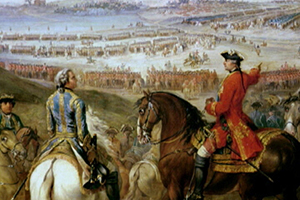
In the annals of history, the complexities of European politics often cast their ripples across the vast Atlantic, touching the New World's shores with the spectre of conflict. Such was the tale of King George's War (1744-1748), a North American chapter in the larger volume of the War of the Austrian Succession.
England, at this juncture, found herself in the throes of continental discord. The spark had been the question of Austrian succession after the death of Charles VI in 1740. As Europe split into warring camps, tensions naturally extended to colonial territories. The English colonies in North America found themselves pitted against their age-old adversaries: the French and their Native American allies.
Though the New World's battleground was distinct, its echoes mirrored the ambitions and animosities of the Old World. The territories in contention were primarily in the northeast of the continent, with the pivotal theatre being the frontier between New England and New France.
One of the most audacious episodes of this war was the New Englanders' siege of Louisbourg in 1745. Louisbourg, a fortress of considerable reputation, guarded the entrance to the Gulf of St. Lawrence and was deemed nigh impregnable. Yet, the colonial forces, under the leadership of William Pepperrell and with the naval assistance of Commodore Peter Warren, managed to lay siege and eventually capture this French bastion after six weeks. This victory, unexpected as it was, bolstered the morale of the British colonists and provided a strategic advantage in the region.
Yet, as is often the case in wars shaped by distant politics, gains on the battlefield were sometimes squandered on the negotiation table. The 1748 Treaty of Aix-la-Chapelle, which concluded the War of the Austrian Succession, saw Louisbourg returned to the French in exchange for territories in India and the Low Countries. This decision, made in the smoke-filled rooms of European palaces, was met with incredulity and bitterness by the New Englanders who had fought and bled for the fortress.
King George's War, while a subset of a broader European conflict, was emblematic of the colonial struggles of the 18th century. It was a testament to the fact that the fates of the American colonies were, for the time being, still bound to the whims and wars of distant monarchs. The British and French, with their respective colonies and native allies, would remain locked in this imperial dance, their steps guided by the melodies of European politics, until the rhythms of revolution would change the tune altogether.
If you have a suggestion regarding additional topics you would like to see included - please let us know
Reference: Article by Greg Scott (Staff Historian), 2024